
Why These Four Letters Trip Up Almost Every Learner
Serbian pronunciation has a reputation for being tricky, and most of that reputation comes down to four letters. Most people learning Serbian run into a wall when it comes to telling Č, Ć, Dž, and Đ apart — and pronouncing them correctly.
The core difference is that two are soft (Ć and Đ) and two are hard (Č and Dž). Native speakers absorb this naturally, without ever thinking about it, while foreign learners usually have to consciously learn to hear the difference before they can reproduce it.
Interestingly, this shows up less in speech than in writing — when you can’t “hear” a sound clearly, you can’t spell it correctly either. Even Russian speakers run into this, despite Russian belonging to the same Slavic language family. I’ve seen this firsthand with Russian children I’ve taught: they could read texts in both Latin and Cyrillic script without any trouble, but it took time before they could reliably tell the sounds apart and write them correctly.
The same pattern shows up with adult learners, though it usually takes them a bit longer. Unlike children, they aren’t sitting through daily Serbian-language classes at school, and they don’t get nearly as many chances to practice through exercises and assignments.
Everyone gets there eventually. The real question is whether they’re shown the right method early enough to make that path shorter.
Start With What Doesn’t Change: The Vowels and Basic Consonants
Before we get to the tricky sounds, here’s the easy part: a, e, i, o, u. In Serbian, these five vowels always sound the same, no matter where they show up in a word. There’s no guessing, no exceptions — you read a vowel, you say a vowel.
- A: auto (car), avion (airplane), ananas (pineapple), adresa (address), armija (army)
- E: ekran (screen), elipsa (ellipse), energija (energy), etiketa (label), evro (euro)
- I: igla (needle), igra (game), insekt (insect), ime (name), izlaz (exit)
- O: oko (eye), olovka (pencil), orah (walnut), oblak (cloud), ostrvo (island)
- U: uho (ear), ulica (street), učitelj (teacher), uniforma (uniform), usna (lip)
It’s the same with a set of consonants: b, f, g, d, k, l, p, r. One sound, one letter. No surprises.
- B: banana (banana), bicikl (bicycle), bubanj (drum), brdo (hill), bolnica (hospital)
- F: fudbal (football), fotografija (photo), flaša (bottle), frižider (fridge), farma (farm)
- G: grad (city), gitara (guitar), glava (head), gnezdo (nest), gumica (eraser)
- D: dan (day), dete (child), dvorište (yard), drvo (tree), daska (board)
- K: kafa (coffee), knjiga (book), kuća (house), krov (roof), ključ (key)
- L: limun (lemon), lopta (ball), lekar (doctor), leto (summer), list (leaf)
- P: pas (dog), papir (paper), prozor (window), pećina (cave), put (road/way)
- R: riba (fish), ruka (hand), ruža (rose), raketa (rocket), restoran (restaurant)
That’s actually good news. It means the hard part of Serbian pronunciation isn’t the whole language — it’s a small, specific group of consonants. Once you know which ones to watch for, you know exactly where to focus.
This phonetic consistency is actually one of the reasons Serbian is less intimidating than it looks, as I explain in Is Serbian Hard to Learn?
The Smile Trick: How to Tell Soft and Hard Sounds Apart
Serbian consonants split into two families: soft ones and hard ones. The easiest way to tell them apart isn’t a grammar rule — it’s your own face.
Below, you’ll go through the soft sounds first, then the hard ones — say each group out loud as you go.
The Smile Trick with: Ć, Đ – Soft Sounds
There’s no exact equivalent of Ć and Đ in standard English. The closest approximations are usually found in the British pronunciation of words such as tune or tube for Ć, and duke or during for Đ.
Both are soft sounds — they come out easily while you’re smiling. Keep your mouth open, smile, and try:
- Ć: ćebe (blanket), ćošak (corner), ćelija (cell)
- Đ: đumbir (ginger), đakon (deacon), đak (student)
It sounds almost too simple, but say these out loud with a real smile and you’ll feel your mouth doing something specific — lips slightly spread, tongue closer to the front.
The Smile Trick with: S, Z, C, Lj, Nj – Soft Sounds
Say the words below — one at a time, smiling as you say each one. Notice how your lips are slightly spread, and your tongue sits closer to the front of your mouth.
- S: sat (clock/watch), sunce (sun), selo (village), sneg (snow), stolica (chair)
- Z: zec (rabbit), zvezda (star), zemlja (earth/land), zub (tooth), zmija (snake)
- C: cvet (flower), cipele (shoes), crv (worm), cigla (brick)
- Lj: ljubav (love), ljudi (people), ljuljaška (swing), ljut (angry/hot, spicy)
- Nj: njiva (field), njeno (hers), njegov (his), njuška (snout/muzzle)
The Trick Without a Smile: Č, Dž, Š, Ž – Hard Sounds
Now drop the smile completely, and say these out loud with a relaxed, neutral mouth. The closest English approximations are chair or champion for Č, George or John for Dž, show for Š and vision for Ž.
- Č: čamac (boat), čekić (hammer), činija (bowl), čuvar (guard), čvor (knot)
- Dž: džin (giant), džemper (sweater), džojstik (joystick), džudo (judo), džinovski (gigantic)
- Š: šuma (forest), šapat (whisper), šibica (match), šraf (screw), štap (stick)
- Ž: žbun (bush), želja (wish), ždral (crane), žalfija (sage), žurka (party)
Where Mispronunciation Actually Costs You
In everyday small talk, pronunciation mistakes rarely matter. People understand you anyway. But at work, especially in writing, it’s different.
Surnames and Names in Professional Settings
Mispronunciation becomes especially obvious in writing when it comes to Serbian surnames — about 90% of which end in –ić (Petrović, Ivić, Stokić, Đoković, Klajić). Mix up that soft ć with the hard č, and people may assume the person is Russian instead — think Fjodorovič, Ivanovič, Romanovič, Sergejevič. In professional settings — the kind I cover in Serbian for Business — a small slip like this can shape a first impression before you’ve said much else.
Names of places, everyday nouns, and well-known cultural terms can sound strange or even funny if you swap a hard sound for a soft one, or the other way around.
Geographic Names and Places
- Čačak — a city in Serbia ❌ Ćaćak
- Ćuprija — a city in Serbia ❌ Čuprija
- Čukarica — a municipality of Belgrade ❌ Ćukarica
- Ćićevac — a town in Serbia ❌ Čičevac
Words Where One Letter Changes Everything
- ćerka (daughter) ❌ čerka (not a standard word)
- ćutati (to be silent) ❌ čutati (a different, non-standard form)
- čelo (forehead / cello, depending on context) ❌ ćelo (relates to “bald” in some derived words — not the same)
- čar (charm, magic) ❌ ćar (not a standard word, relates to “gain/benefit”)
- ćup (jug/pot) ❌ čup (a different word entirely, without meaning)
Cultural Terms and Well-Known Names
- Čarobnjak iz Oza — The Wizard of Oz ❌ Ćarobnjak iz Oza
- Četiri godišnja doba — The Four Seasons ❌ Ćetiri godišnja doba
- Ćirilo i Metodije — Cyril and Methodius ❌ Čirilo i Metodije
- Čiča Gliša — a well-known literary character/expression ❌ Ćića Gliša
Food and Everyday Words
- čokolada — chocolate ❌ ćokolada
- ćevap — kebab / grilled meat dish ❌ čevap
- čorba — soup ❌ ćorba
- ćuretina — turkey meat ❌ čuretina
- česma — fountain/tap ❌ ćesma
When It Actually Matters: Names, Forms, and Payments
Funny and memorable mistakes are a natural part of learning Serbian. In my lessons, I have often seen amusing examples of mixing hard and soft sounds in writing among the children of my adult students, such as đin instead of džin (giant) or ćorba instead of čorba (soup).
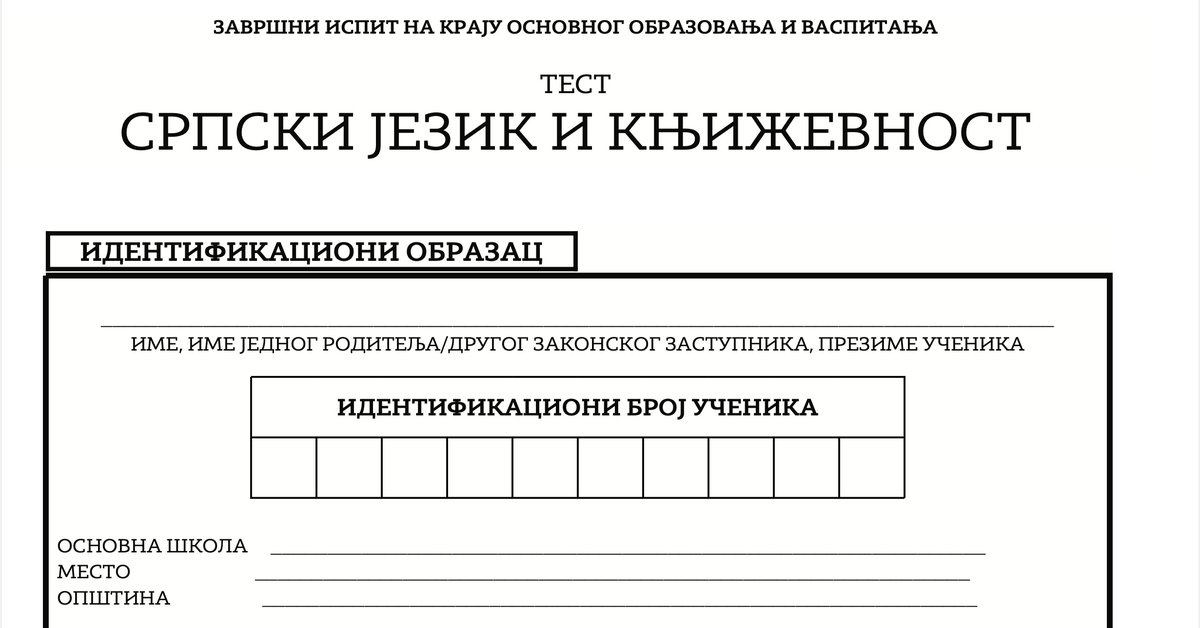
While these mistakes are usually charming when children make them, the same type of confusion can create practical problems for adults learning Serbian. This becomes especially important when filling in official forms, writing addresses, or making bank payments.
A single incorrect letter in a name or place, especially when filling in an online form, can cause confusion or even prevent a document or payment from reaching the correct person. For example:
- ❌ Petrovič Džordže, Majevićka 9, Čičevac
- ✅ Petrović Đorđe, Majevička 9, Ćićevac
Learning the difference between č, ć, dž, and đ is therefore not only about pronunciation. It is also about writing names, addresses, and everyday information accurately in Serbian.
Simple Ways to Practice (Without a Course)
You don’t need to pay for a course or use an app to train your ear. You simply need regular practice and a way to check your progress.
Start by listening — podcasts, TV shows, and real conversations with Serbian speakers are valuable sources of natural pronunciation. Train your ear first before trying to produce these sounds yourself.
A useful starting point is to write down three words for each sound and memorize them. These words become your pronunciation anchors. Once you can clearly hear the difference, record yourself saying word pairs such as ćao/čokolada or đak/džak and compare your pronunciation with a native speaker’s recording.
These first words can also help you remember new vocabulary later. For example, if you memorize three words with Dž — džungla, džin, džez — you can connect every new dž word with this group and use the same sound association to pronounce it correctly.
Frequently Asked Questions
These are the mix-ups I hear most often when learners start working on Č, Ć, Dž, and Đ.
Is it a big deal if I mix up Č and Ć?
Not really in speech — people usually understand you anyway. In writing, it’s more visible, and for a few words, it actually changes the meaning.
Does the smile trick really work, or is it just a beginner’s crutch?
It’s a starting point, not a permanent habit — most learners eventually feel the difference without needing to smile on purpose. But it’s a fast way to get there.
Which pair is harder for English speakers?
Č and Ć are usually harder at first. English only has one “ch” sound, so you have to learn to split it into two. Dž and Đ tend to come easier once you’ve got that.
Do I need to master this before I start speaking?
No. Start speaking anyway. These are details you improve over time — not something you need to get right before you begin.
Ready to Start Learning Serbian?
Getting Č, Ć, Dž, and Đ right isn’t about sounding perfect. It’s about being understood the way you mean to be. If you want real feedback on your own pronunciation, not just rules on a page, explore Serbian Lessons for International Professionals and let’s work on it together.
Lessons are available online worldwide and in person in Novi Sad.