Is Serbian Really Hard to Learn?
Yes, Serbian is hard to learn, at least to some extent — it belongs to Category IV of language difficulty for English speakers, more demanding than Italian or Spanish (Category I), but far from the level of Arabic or Japanese (Category V). According to the official classification, it is a challenging language, but in my experience, it is manageable for anyone with a clear professional goal.
Today, people from many different backgrounds learn Serbian. Some move to Serbia for work, while others are NGO professionals, entrepreneurs, researchers, students, or partners and children of Serbian citizens. Their goals may differ, but they all want to communicate confidently with people in Serbia in both everyday and professional situations.
Purpose Matters More Than Perfection
So the real question isn’t whether Serbian is difficult — it’s whether you have a reason to use it. In my experience, however, learning a language becomes much easier when it has a clear and practical purpose, whether personal or professional. Otherwise, there is a trap: you learn it like Latin, as a dead language. Grammatical rules and the fear of making mistakes weigh you down instead.
I have seen this happen many times in my work with colleagues from different countries. Once they start working and communicating with Serbian colleagues, they immediately begin using their Serbian, regardless of their level. If a situation requires them to defend a position or express an opinion, they often draw on all the Serbian they have learned so far and use it without worrying too much about cases or verb forms. In those moments, fluency is not the most important thing. What matters is the purpose of communication.
Using the language sends a signal: that you are here, that you are paying attention, and that learning Serbian is more than a grammar exercise. Once you see the real purpose of learning Serbian — communicating with people around you — the grammar stops being the point.
What Makes Serbian Challenging?
A complex system of seven cases and specific verb forms that take time to master makes Serbian challenging.
This may feel unfamiliar if your native language is English, French, or Arabic, but more familiar if you speak Russian, Polish, or German.
Difficulties with Seven Cases
Serbian nouns, as well as pronouns, adjectives, and numerals, change their endings depending on their role in a sentence. Serbian has seven cases: Nominative, Genitive, Dative, Accusative, Vocative, Instrumental, and Locative. The same person appears in every sentence, but the endings change according to the case.
A practical example is the noun Ana and the adjective lepa (beautiful):
Nominative: Lepa Ana je ovde. (Beautiful Ana is here.)
Genitive: Bojim se lepe Ane. (I am afraid of beautiful Ana.)
Dative: Dajem knjigu lepoj Ani. (I am giving a book to beautiful Ana.)
Accusative: Vidim lepu Anu. (I see beautiful Ana.)
Vocative: Hej ti, lepa Ana, dođi! (Hey, beautiful Ana, come here!)
Instrumental: Razgovaram sa lepom Anom. (I am talking with beautiful Ana.)
Locative: Pričam o lepoj Ani. (I am talking about beautiful Ana.)
Cases make Serbian seem difficult at first, but the system clicks into place faster than most learners expect once they start using it instead of memorizing it.
In my experience, grammar tables are useful as a reference, but real communication is what turns grammatical rules into automatic habits.
Difficulties with Serbian Verb Forms
Serbian verbs have personal and non-personal forms. At first, the number of verb forms may seem overwhelming, but in practice, beginners use only a small number of them in everyday communication.
The main tenses include: Present: čitam (I read), Perfect: čitao sam (I read / I was reading) and Future I: čitaću, ću čitati (I will read).
The main moods are: Imperative: čitaj! (read!), Conditional: čitao bih (I would read) and Future II: budem čitao (I will have read / if I read).
Serbian also includes several less common tenses, such as the Aorist, Imperfect, and Pluperfect, which today appear mainly in literature, historical narratives, and older styles of writing rather than everyday speech.
Non-personal forms include the Infinitive (čitati – to read), Present and Past Verbal Adverbs, and the Active and Passive Participles.
I often tell my students not to worry about mastering every verb form at the beginning. I have seen many people understand exactly what they wanted to say but hesitate because they were searching for the “perfect” tense. That certainty doesn’t arrive by waiting for it — it arrives from using the tenses wrong a few times first. Start communicating first—the grammar will become more natural with practice.
What Makes Serbian Easier Than You Expect?
Learning Serbian is surprisingly approachable for three reasons: strictly phonetic pronunciation rules, recognizable loanwords with predictable vocabulary patterns, and a highly supportive native population. People deeply appreciate any effort you make to speak their language.
Pronunciation is Consistent
Serbian pronunciation is consistent. Unlike English, Serbian spelling matches its pronunciation exactly. Once you learn the sounds, you can read anything out loud — correctly. No silent letters, no surprises, the rule is simple — “read exactly as it is written,” or “one sound, one letter.”
For example, you pronounce words such as restoran, profesor, and biblioteka exactly as they’re spelled. Once you learn the Serbian alphabet, reading becomes surprisingly straightforward, even if you do not yet understand every word.
Vocabulary Has Patterns
Many professional terms in Serbian are immediately recognisable to international professionals, especially in law, administration, and EU-related fields. Words such as komunikacija, administracija, organizacija, profesor, and telefon often feel familiar from the very beginning.
People Appreciate the Effort
In Serbia, people see even a modest attempt to speak the local language as a sign of respect — and it changes how they respond to you in both professional and everyday situations.
And this isn’t just goodwill — it’s practical. Colleagues and institutions respond differently once they see you’re actually trying, even imperfectly.
What’s the Biggest Mistake Beginners Make Learning Serbian?
Most beginners try to master grammar rules before they start speaking. In my experience, this slows progress significantly. Students who start communicating from day one — even with just a few words and imperfect grammar — develop confidence and fluency much faster than those who wait until they feel “ready.”
If you want to understand what realistic progress looks like at each stage, read How Long Does It Take to Learn Serbian.
Why Are You Really Learning Serbian?
If your goal is to communicate with people and use Serbian as a tool for communication, you will probably find that the language is not as difficult as it seems. This is especially true if you already speak another Slavic language.
If your goal is to reach a high level of proficiency, however, you will need to invest significant time and effort.
Remember that if you work with Serbian institutions, colleagues, or local communities, even a basic knowledge of Serbian can change the way people respond to you. It signals respect, commitment, and cultural awareness. In diplomatic, international, and NGO environments, that matters enormously.
Is Serbian Worth Learning?
Yes. If you live, work, or plan to build a career in Serbia, learning Serbian is well worth the effort.
Serbian is not an easy language, but it is demanding rather than impossible. With a clear purpose, the right learning method, and regular practice, most learners make steady progress. The phonetic writing system, recognisable professional vocabulary, and the welcoming attitude of Serbian speakers all work in your favour.
Every lesson I teach starts from your profession, your schedule, and what you actually need to say — not a chapter of a textbook. If you are ready to start, explore my Serbian lessons for international professionals and see how this approach works in practice.
Frequently Asked Questions
Is Serbian harder than Croatian?
No. Serbian and Croatian are very similar languages. If you learn Serbian, you will understand not only Croatian but also Bosnian with very little difficulty.
Is It Hard to Learn Cyrillic?
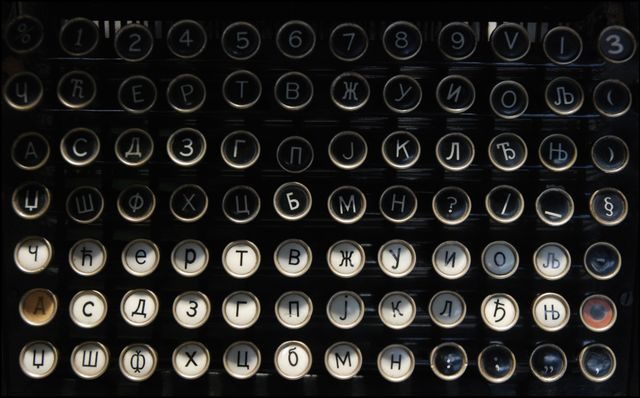
Not as hard as it looks — Cyrillic quickly becomes readable, which surprises most learners. Most beginners start with the Latin alphabet because people widely use it in everyday communication, websites, and business. You can introduce Cyrillic gradually without slowing down your progress. It is also very practical, as many street signs, place names, and public institutions in Serbia use Cyrillic.
How long it actually takes, which script to start with, and whether Cyrillic is worth the effort early on — these are questions that deserve a fuller answer. I will be covering this in an upcoming post dedicated entirely to learning the Serbian Cyrillic script.
How long does it take to learn Serbian?
It varies with your goals, your native language, and how consistently you practise. For a full breakdown by level and learning scenario, read How Long Does It Take to Learn Serbian.
Ready to Start Learning Serbian?
I build every lesson around your profession, your actual communication goals, and your schedule — not a generic textbook syllabus. Explore Serbian for Expats and International Professionals to see how a structured, goal-oriented plan works in practice.
Lessons are available online worldwide and in person in Novi Sad.