About This Method
Extensive and intensive reading are two complementary reading techniques used in language learning. Unlike some other methods in this series, there’s no single author credited with this one — it’s an established approach in applied linguistics, systematically promoted by the Extensive Reading Foundation, a non-profit dedicated to spreading extensive reading in language teaching, whose guide explains this distinction in detail.
Below is an example of how you can learn Serbian using this method — with practical exercises and real texts tailored to foreigners learning Serbian.
What extensive reading means when you’re learning Serbian?
Try reading the Serbian version first, without looking at the translation below — then check your understanding. This method is slower, but it uncovers details that extensive reading misses.
Example: Novi Sad (A1)
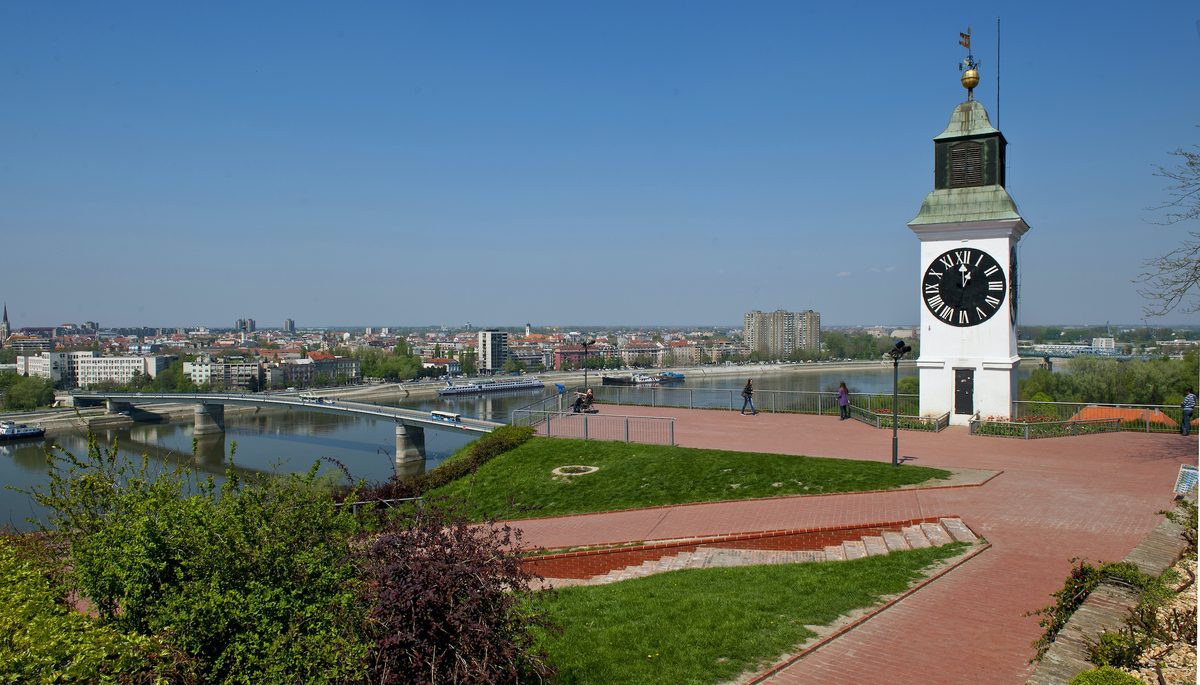
Novi Sad je grad na severu Srbije, u pokrajini Vojvodina. Pored grada je reka Dunav. Ovo je drugi po veličini grad u zemlji. Ljudi kažu da je Novi Sad grad mladih, jer u njemu postoji veliki studentski centar i ima mnogo studenata.
U centru grada su Trg slobode, Srpsko narodno pozorište, Zmaj Jovina i Dunavska ulica. Tu su i kafići, knjižare, restorani, glavna pošta i Dunavski park.
Na desnoj obali Dunava je Petrovaradinska tvrđava. U njoj se organizuje poznati muzički festival „EXIT”. Pored tvrđave je Kamenički park. Tamo ljudi šetaju i odmaraju se posle posla.
U Novom Sadu su ljudi opušteni i mirniji nego u Beogradu. Kaže se da Novosađani uvek imaju vremena i da ne žure. To je grad za miran život i porodice sa decom.
Novi Sad
Novi Sad is a city in northern Serbia, in the province of Vojvodina. The Danube river runs by the city. It’s the second largest city in the country by size. People say Novi Sad is a city of young people, because it’s home to a large student center and has many students.
In the city center are Liberty Square, the Serbian National Theatre, and Zmaj Jovina and Dunavska streets. There are also cafés, bookshops, restaurants, the main post office, and Danube Park.
On the right bank of the Danube stands the Petrovaradin Fortress. It hosts the well-known “EXIT” music festival. Kamenica Park is next to it. People walk there and relax after work.
In Novi Sad, people are relaxed and calmer than in Belgrade. Novi Sad locals are said to always have time and never be in a rush. It’s a city for a quiet life and for families with children.
What intensive reading means when you’re learning Serbian?
Intensive reading is the opposite approach — you pick a short, demanding text and analyze it line by line. You check every unfamiliar word, look at case endings and verb aspect, and note the grammatical patterns that repeat. This method is slower, but it uncovers details that extensive reading misses.
Read the A2-level text below, then apply the instructions above.
Example: Novosadski život (A2)
Novosađani provode svoj dan polako. Prvi razlog za to je Dunav. Drugi razlog je bicikl.
Radna nedelja traje pet dana. Pre posla, grad je tih. Kod Novosađana nema žurbe. Posle posla, vreme se provodi polako. Bez žurbe, dan je prijatan.
Većina ljudi ide na posao biciklom. Bicikl se koristi svaki dan. Teren je ravan, zato je to lako. Ljudi idu i peške, ne samo biciklom.
Kafa se pije polako. To je odmor od posla. Ljudi sede u kafićima posle posla. Kod Novosađana je kafa važan deo dana. Bez kafe, dan nije dobar.
Leti, ljudi idu na Štrand. Štrand je plaža na Dunavu. Porodice provode svoje slobodno vreme tamo. Vikendom, mnogi Novosađani idu na Frušku goru. Oni imaju svoje vikendice.
Novosađani vole da se šale na svoj račun. Njihov humor je tih i blag. Na prijatelja se uvek može računati.
Life in Novi Sad
Novi Sad locals take their day slowly. The first reason is the Danube. The second reason is the bicycle.
The working week runs five days. Before work, the city is quiet. Novi Sad locals are never in a rush. After work, time passes slowly. Without the rush, the day feels pleasant.
Most people commute to work by bike. Bikes are used every day. The terrain is flat, so it’s easy. People also walk, not just cycle.
Coffee is drunk slowly here. It’s a break from work. People sit in cafés after work. For Novi Sad locals, coffee is an important part of the day. Without coffee, the day isn’t complete.
In summer, people go to Štrand. Štrand is a beach on the Danube. Families spend their free time there. On weekends, many Novi Sad locals head to Fruška Gora. They have their own weekend cottages there.
Novi Sad locals like to joke at their own expense. Their humor is quiet and gentle. You can always count on a friend from Novi Sad.
What These Examples Reveal
If you keep this pace through the whole text, you’ll notice four patterns that keep coming back.
- Genitive case with a preposition. The text uses five of the six prepositions this grammar point targets: pre posla, kod Novosađana (2x), posle posla (2x), bez žurbe, bez kafe, od posla (before work, among Novi Sad locals (2x), after work (2x), without the rush, without coffee, from work). The preposition zbog (because of) doesn’t appear in this version of the text — worth noticing during intensive reading, since extensive reading wouldn’t reveal that this particular preposition is missing.
- The reflexive “se” (itself) construction. The “X se Y” pattern repeats five times: vreme se provodi, bicikl se koristi, kafa se pije, (da) se šale, se uvek može računati (time passes, bikes are used, coffee is drunk, they joke, you can always count on someone). This is the most common grammatical pattern in the text.
- The possessive pronoun svoj/svoja/svoje (“one’s own”). It appears four times: svoj dan, svoje slobodno vreme, svoje vikendice, svoj račun (their own day, their own free time, their own cottages, their own expense).
- Numbers. The ordinal numbers prvi, drugi (first, second) open the text; the cardinal number pet (five) appears in radna nedelja traje pet dana (the working week runs five days).
Intensive reading points you to language patterns that repeat — patterns you’d miss if you only read extensively.
The two-pass rule: applying both methods to the same text
The two-pass rule means combining both techniques on a single text, instead of choosing only one.
You read the text extensively first, then go back and read intensively only the part that stayed unclear. This is especially useful when you don’t have time to analyze an entire text in depth.
First pass — extensive reading for the general meaning
In the first pass, you read the whole text without stopping, even when you hit a word you don’t recognize. The goal is to come out of the text with a clear picture of what it’s about — who, what, where, why. If you have to guess a meaning from context, that’s fine — that’s exactly what builds intuition for the language.
Second pass — intensively hunting for words that keep repeating
In the second pass, you go back only to words you noticed more than once, not to every unfamiliar word. A word that appears once probably isn’t a priority; a word that comes back three or four times in the same text is. This filter saves time and focuses your learning on what you’ll actually use.
How to fit the two-pass rule into your learning routine?
The best results come from a combination — a short text for intensive reading in class, and a longer text for extensive reading at home during the week. You don’t need to run both passes on the same text every day; it’s enough to have both types of reading somewhere in your weekly rhythm. If you take lessons online, this rhythm fits easily into remote work as well.
Which Serbian texts to use for extensive reading?
For extensive reading, pick texts you’d read in your own language too, out of genuine interest — not texts written specifically for textbooks.
If you’re curious about famous people from Novi Sad, such as Mileva Marić Einstein, that’s a good place to start. The same goes for local coverage of opera performances at the Serbian National Theatre, or what’s on offer at the Novi Sad Night Market at Riblja pijaca — they’re short and tied to everyday life.
Naturally, the closer a text is to your actual routine, the more likely you are to remember it.
How intensive reading helps in a professional context
For professionals working inside institutions, intensive reading is usually unavoidable, because a report, business correspondence, or an official notice all demand precision. Precision matters more than speed here, because a misread sentence in an official document can have real consequences. This connects directly to what we’ve already covered about Serbian in a business context
Common mistakes when reading Serbian as a foreign language
In my experience, students read Serbian extensively and without pressure, right up until they start learning cases. Eventually, they switch almost automatically into intensive mode, reading every text word by word with excessive concentration, just to avoid mistakes. As a result, this quickly leads to fatigue, frustration, and giving up.
Learning Serbian then stops being enjoyable for them, because the brain is overwhelmed by detail before it manages to connect meaning to the text.
The opposite mistake is extensive reading with no return to repeating words at all. Consequently, it’s easy to keep circling already-familiar words and patterns, which becomes monotonous and boring — and the chance to actually absorb new material is lost.
Conclusion
The two-pass rule gives you a clear framework instead of random reading — the first pass for meaning, the second for words that keep coming back. Combining extensive and intensive reading builds both speed and accuracy, which matters most when you’re using Serbian in a professional setting. If you’d like this approach built into regular lessons, tailored to your goal and pace, take a look at our Serbian lessons for international professionals.
Questions students keep asking
Here’s what students most often ask the first time they try the two-pass rule.
How long should the first pass through a text take?
The first pass takes as long as it takes to read the text once, without stopping — usually 5 to 10 minutes for a one-page text. Speed isn’t the goal; not breaking your reading to chase unfamiliar words is.
Does the two-pass rule work for listening too, not just reading?
Yes, the same principle applies to Serbian audio and video content. You listen once for the general meaning, then go back a second time to the parts that repeat or stayed unclear.
How many unfamiliar words is too many for extensive reading?
If you don’t understand more than one word in ten in a sentence, the text is too demanding for extensive reading. Go back to a simpler text until you can follow the meaning without effort.
What should I do with the sentences I wrote down during the second pass?
Those sentences are the foundation for the next step in learning — sentence mining, a technique we’ll cover in detail in the next blog post. For now, keep them in one place, together with the translation
Ready to put the two-pass rule to work?
Reading on your own is a great start, but a text only teaches you as much as you can pull from it alone. In lessons, we pick texts matched to your actual level and field — a field report, a contract clause, a colleague’s email — and work through both passes together, so the patterns you’re meant to notice don’t slip by. Book a Serbian lesson built around your own reading material.